Introduction
Trowers & Hamlins is an international law firm headquartered in the UK, with offices in Manchester, Birmingham, London, Exeter, Abu Dhabi, Dubai, Bahrain, Oman, Malaysia, Singapore and Saudi Arabia. We have over 170 partners and more than 1000 people located across our offices. We work to the highest professional standards and comply with all laws, regulations and rules relevant to our business, and we expect the same from our suppliers and business partners. Our supply chain includes the following industries:
- IT (hardware and software) and telecommunications;
- Facilities and office services (including cleaning, catering, security, facilities management and transport);
- Information services and knowledge management;
- Media, marketing, promotions and events;
- Employment, recruitment and employee benefits; and
- Finance and banking services.
Our Commitment
We have zero tolerance for modern slavery and human trafficking in any part of our business or supply chain. We are committed to acting ethically and with integrity in all our business relationships and to implementing and enforcing effective systems and controls to ensure modern slavery is not taking place anywhere in our operations or supply chains. We recognise that the legal services sector has a responsibility to lead by example in upholding human rights and we are committed to transparency in our approach to identifying and addressing modern slavery risks. We hold ourselves accountable for this commitment and expect all those with whom we do business to share these values.
Risk Assessment
We recognise that modern slavery risks vary across our supply chain depending on the nature of services provided, the sector, and geographic location. Through our due diligence process, we have identified the following as higher-risk areas requiring enhanced scrutiny:
Supply chain risk areas:
- Facilities and office services (cleaning, catering, security, and facilities management) are considered high-risk due to the prevalence of subcontracting, shift work, and labour-intensive operations where vulnerable workers may be exploited;
- IT hardware supply chains, particularly where manufacturing occurs in regions with weaker labour protections; and
- Transport and logistics services, which may involve migrant workers in vulnerable situations.
Geographic considerations:
While our offices operate in jurisdictions with robust labour protections, we acknowledge that modern slavery risks exist globally. We pay particular attention to suppliers whose operations or supply chains extend into regions identified as higher-risk for labour exploitation, including certain manufacturing hubs in Asia and regions with significant migrant worker populations.
Legal sector specific risks:
Within the legal services sector, modern slavery risks primarily manifest in our indirect supply chain rather than our direct operations. As a professional services firm, our workforce consists of qualified professionals with strong employment protections. However, we remain vigilant regarding:
- Exploitation within third-party service providers operating within our premises;
- Risks associated with temporary or contract staff provided through agencies;
- Supply chains for goods (particularly IT hardware, office supplies, and branded merchandise) where manufacturing processes may involve exploitation; and
- Overseas administrative and support functions where labour standards may differ from UK requirements.
We review our due diligence processes accordingly to address emerging risks and ensure continuous improvement in our approach to preventing modern slavery.
Prevention of Modern Slavery
Our core values centre on equality, diversity, inclusion and responsible business. We have a variety of policies to foster a positive and fair working culture including our Responsible Business strategy (which we update and report on annually) and policies on Equality, Diversity and Inclusion, and Wellbeing and Stress Management.
During the 2025/26 financial year, we launched our Inclusion Champions initiative, a dedicated senior leadership role in each department, to advocate for inclusion, ensure local processes are fair and inclusive, and promote meaningful engagement across teams.
We have Respect at Work and Whistleblowing Policies, alongside our culture of inclusion. We promote an open working environment which enables employees to report if they have concerns about any wrongdoing or breaches of the law or regulations, including any suspected instances of modern slavery or human trafficking. All concerns can be raised in confidence and without fear of disciplinary action.
We continually review our recruitment procedures and providers to ensure that all our employees are legally entitled to work in the jurisdiction in which they are employed. This includes conducting thorough right-to-work checks, verifying identity documents, and ensuring that no employee is required to pay recruitment fees or surrender identity documents, which are indicators of potential forced labour.
We aim to ensure the wellbeing of all our employees by promoting mental and physical health through a variety of firm initiatives. During the 2025/26 financial year, these have included our Employee Assistance Programme providing confidential counselling and support services, a network of trained mental health first aiders, flexible working arrangements, wellbeing workshops and seminars, and dedicated wellbeing days to support work-life balance.
We provide mandatory training to our staff to ensure a continuing level of understanding of the risks of modern slavery and human trafficking in our business.
All employees in the UK are paid at least the Real Living Wage (UK or London as applicable) as set by the Living Wage Foundation. Suppliers which are "regularly contracted staff" (as per the Living Wage Foundation's definition) are paid the Real Living Wage or above, and for those suppliers where we are not in control of their wage structures, we ask them to provide confirmation that they are paying, or working towards payment in accordance with the Living Wage Foundation's recommended rates.
When we onboard new suppliers, or renew existing suppliers, Modern Slavery risk identification and management form part of our supplier due diligence process through questionnaires, risk assessment and escalation (as applicable). Enhanced due diligence is conducted if any risks are identified as high.
Supplier Code of Conduct
During the 2025/26 financial year, we launched our Supplier Code of Conduct, which all suppliers are expected to comply with as a condition of doing business with us. The Code explicitly addresses modern slavery and human trafficking, setting clear expectations that suppliers must ensure their operations and supply chains are free from forced labour, child labour, and exploitation. Suppliers are expected to cascade these standards through their own supply chains and to report any concerns to us promptly.
Accreditations
In the past financial year we have obtained ISO 9001 (Quality Management), ISO 14001 (Environmental Management), and ISO 27001 (Information Security Management) certification. These standards strengthen our approach to modern slavery prevention by requiring robust supply chain due diligence, ethical procurement practices, and comprehensive risk assessment processes that help identify and mitigate forced labour risks within our operations and supplier networks.
We have also been awarded a Bronze medal by EcoVardis in this financial year, placing us in the top 35% of companies assessed.
This Modern Slavery Statement is issued in accordance with the Modern Slavery Act 2015 and constitutes our slavery and human trafficking statement for the financial year 2025/26.
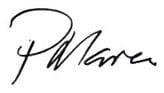
Signed by Paul Marco, Designated Member and Managing Partner for and on behalf of Trowers & Hamlins LLP
23 March 2026
Legal notices
- Anti-money laundering statement
- Approach to bribery and corruption
- Complaints
- Data protection complaints procedure
- Data protection complaints form
- Fair processing notice
- Fraud alert
- Modern slavery statement
- Notices and accessibility statement
- Tax evasion statement
- Terms and conditions for using this website